There’s a lot of hand-wringing right now about what AI will do to creativity. That it’ll flatten taste. Kill originality. Do away with the instinct to make something strange, specific, unforgettable.
But the creatives actually breaking through right now tell a different story.
The bar hasn’t dropped. It’s leveled up.
Because when so much of what’s generated these days has an air of robot, the only thing that cuts through is work that feels impossible to replicate. Work with a point of view that makes you stop mid-scroll, knowing AI could never possibly have created what this human made.
Robbie Blue | Choreographer
"Fucked-up Fosse."
That’s what Robbie Blue calls his choreography style. Think Broadway precision fused with hip-hop energy.
It’s a killer combo that stopped the Internet cold during the 2025 Grammys. When Doechii took the stage, backed by dancers on conveyor belts and sliding floors, people were mesmerized. Cameras caught Billie Eilish mouthing “Oh my God” as it ended.
The consensus was instant: best performance of the night. Maybe one of the best in Grammy history.
Robbie was just 24.
Robbie got his break when, at 16, Britney Spears’ choreographer Brian Friedman took him under his wing. He had been training at a queer dance studio in small-town Ohio.
By 18, he was dancing professionally for major artists like Taylor Swift and Olivia Rodrigo. During COVID, when tours stopped, he started self-producing his own concept videos, going $5,000 into debt per shoot, casting dancers, hiring videographers, building full productions from scratch purely to get his aesthetic out into the world.
Major artists took note and followed. Then Doechii slid into his DMs.
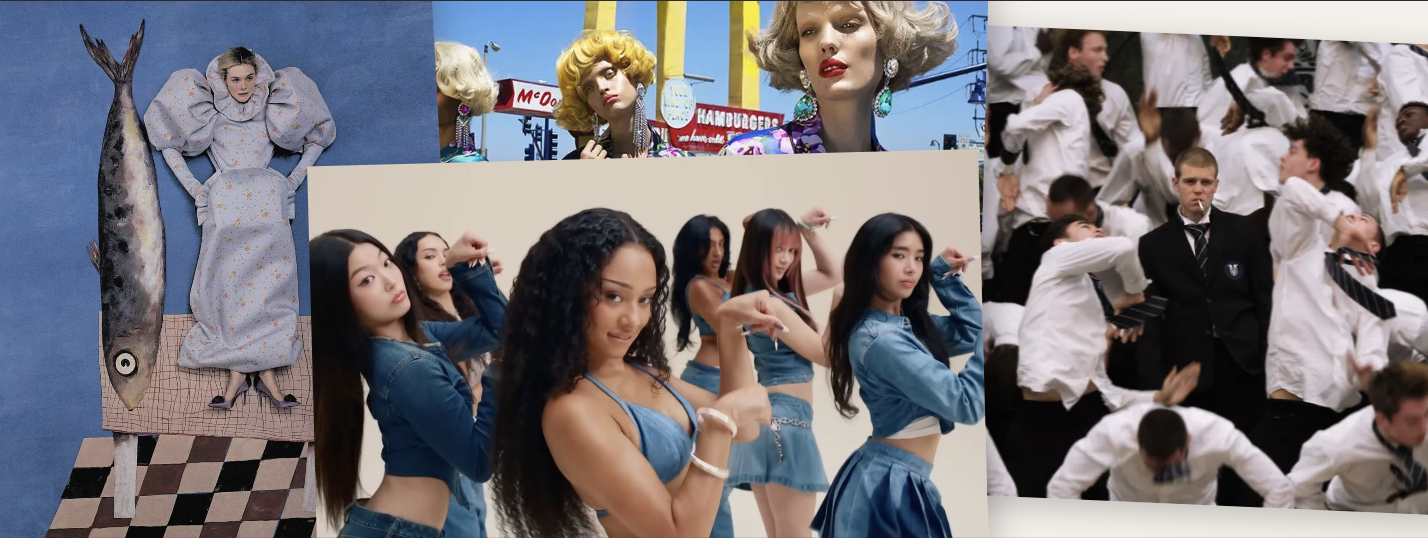
After choreographing the Grammys performance, everyone knew his name. And winning an Emmy confirmed it. His next move: choreographing the Gap "Better in Denim" campaign with KATSEYE, set to Kelis' "Milkshake." It racked up 400 million views in its first three days.
And most recently: the Lady Gaga x Doechii "Runway" video for The Devil Wears Prada 2, which dropped just days ago — complete with a "Telephone" easter egg that sent fans into a spiral.
Petra Collins | Photographer & Director
Before Euphoria existed, Petra Collins had already built its world.
The Canadian-Hungarian photographer spent the early 2010s developing a visual language: soft-focus femininity, 35mm grain, girlhood shot with intimacy instead of exploitation. She directed music videos for Olivia Rodrigo, Cardi B, and Selena Gomez. She photographed Zendaya, Charli XCX, Rosalía. The aesthetic was hers.
She told Hungarian publication Punkt that, then, Sam Levinson called and told her he had written a show based on her photographs and wanted her to direct it. She moved to LA and spent five months working on the show before HBO let her go.
She told the publication that a year later she walked out of her apartment and saw the Euphoria billboard, and it hit hard.
She didn't stop. Her first major solo exhibition, fangirl, opened in Seoul in 2025. 500 works spanning her entire career. Her latest book, STAR, released with Rizzoli this year, follows two fictional pop icons through fame, obsession, and the violence of being watched. She made an original soundtrack to go with it.
Szilveszter Makó | Photographer
When photographer Szilveszter Makó shot Elle Fanning for Who What Wear’s January 2026 cover story, the internet immediately locked onto one image in particular: Fanning, dressed in black, standing beside a giant flaming cardboard fork inside what looked like a surreal paper dollhouse. In another frame, she’s placed inside a miniature shadow-box version of the Hollywood Hills. In another, she poses beside oversized cutout props that look somewhere between theater scenery and a child’s handmade art project.
Some initially assumed the images were AI-generated or heavily CGI-enhanced. But almost everything in the frame was physically built by hand inside Makó’s Milan studio using cardboard, painted paper, recycled materials, handmade props, and carefully constructed sets.


That tactile quality is central to Makó’s process. In interviews, the Hungary-born, Milan-based photographer has explained that he relies almost entirely on natural daylight and avoids flash photography altogether, calling flash his “perfect enemy.”
He’s also said that without natural light, he “starts to sweat,” which is why he prefers shooting in his own Milan studio where he can fully control the environment.

Born in Hungary and now based in Milan, Szilveszter is a former painter whose photographs have quickly found homes in outlets like Vogue, The Cut, Vanity Fair, and GQ. On the commercial side, he’s created abstract and arresting images for Zara, Adidas, Schiaparelli, Maison Margiela, and Prada. His subjects range from Miley Cyrus to Michelle Yeoh.
He guards his post-production process a bit more, saying: “I would not call it a secret but more of an unorthodox process… those who understand the history of analog photography could probably recognize what I am doing.”
One recurring element is the box, which appears in many of his images and gives physical constraints to the subject. “For me, the box is both a restriction and a liberation. It centralizes the host whilst simultaneously amplifying it, preventing energy from scattering across the frame.”
Szilveszter describes himself as intense and impatient. He’s cited the influence of both Surrealism and grotesque art.
And while he spends so much time preparing materials and vision for a shoot, he leaves room for surprise. "Control makes images cold and calculated, leaving much without meaning,” he says. “A shoot should breathe, it should evolve, it should shock even those who are making it."
Romain Gavras | Director
Romain Gavras is one of the most influential visual directors of the last two decades, known for making films and music videos that feel massive, chaotic, and strangely real at the same time.
He grew up in Paris surrounded by cinema. His father is legendary political filmmaker Costa-Gavras, who became famous for films about authoritarianism, political violence, and social unrest inspired by real events in places like Greece and Chile. You can feel traces of that influence in Romain’s work, even though he took a very different path.
Instead of prestige political cinema, Gavras became one of the defining directors of the modern music-video era. He channels tension, spectacle, choreography, and mass movement into imagery that feels physically overwhelming. The visuals leave you with a sense of awe. Plus some low-grade anxiety. Like something beautiful is seconds away from collapsing.
Take the music video for Gosh by Jamie xx. Filmed inside Tianducheng, China’s uncanny replica of Paris, it features 400 children in identical uniforms moving in perfect synchronization through empty boulevards and oversized plazas.
The scale might feel digitally generated. But every movement is real.
That obsession with physical spectacle is what has made Gavras one of the defining music-video directors of the internet era. He’s worked with artists like M.I.A., Justice, Jay-Z, and Kanye West.
One of the most iconic examples is Bad Girls by M.I.A, filmed in Morocco, where women drift cars on two wheels through the desert in flowing robes. More than a decade later, it still feels untouchable.
His feature films operate the same way. In Athena, his 2022 Netflix film about escalating violence between police and residents inside a French housing project, Gavras opens with a now-famous roughly ten-minute single take that moves through riots, fireworks, burning cars, and clashes with police. All without a visible cut. The sequence required weeks of rehearsal, real pyrotechnics, and highly coordinated stunts, and was immediately hailed as one of the most technically ambitious opening scenes in recent cinema.
Gavras is obsessed with pushing physical filmmaking to its limits. Hundreds of extras. Massive choreography. Practical effects. Images that feel impossible specifically because they actually happened.
“If I have a responsibility as a filmmaker,” Gavras told Flaunt, “then that responsibility is towards cinema and towards the images I create.” He’s also said he avoids making work that can be “reduced to a hashtag.”
That’s a big part of why his latest project, Storm for Yung Lean, has exploded online. The seven-minute boarding-school fever dream, choreographed by Damien Jalet, features boys in blazers moving through marble hallways with eerie precision. Critics immediately framed it as exactly the kind of thing AI can’t replicate: too physical, too coordinated, too human.
Nadia Lee Cohen | Photographer & Director
In 2022, Nadia Lee Cohen put Kim Kardashian on the cover of Interview Magazine with bleached brows, a Canadian tuxedo, and a blank stare that made the most photographed woman in the world completely unrecognizable. The internet couldn’t look away.
Cohen is a British photographer and director who has shot Rihanna, Lana Del Rey, Kate Moss, Julianne Moore, and Chloë Sevigny. As a director she has worked with Beyoncé, Tyler the Creator, and A$AP Rocky, shot campaigns for Balenciaga and On Running, and been recognized at Cannes, the VMAs, SXSW, and the Berlin Film Festival.
She grew up on a farm in rural England, building sets in her parents' garage before she was a teenager. Moved to LA chasing the Hollywood she'd seen in films and found a boulevard full of dollar stores and broken dreams, which she promptly started shooting.
Her images are saturated and precisely constructed. Motels, red lips, exaggerated femininity, women who look like characters from a film. The makeup is always a little too much. The wigs are intentionally noticeable. The poses are melodramatic. "I just get bored with anything typically pretty," she's told We Heart. "I enjoy the melancholic, both in art and cinema."
Her Women monograph, 100 fictional female characters shot in diners, motels, and American suburban settings, became a cult classic, with unauthorized pirated copies circulating because demand outpaced supply.
Faig Ahmed | Textile Artist
One second, Faig Ahmed’s rugs look like traditional Azerbaijani carpets. The next, they appear to melt into the floor, glitch into pixels, or explode into colorful strands of wool.


That tension, between ancient craftsmanship and digital-age distortion, is exactly what made Faig Ahmed one of the most unusual and recognizable textile artists on the internet right now.
“Taking into consideration this deep influence of tradition, the carpet is still a symbol of home, coziness, family values and hospitality,” Faig told Hi-Fructose. “It turned out that the easiest way of communicating with a carpet was destroying it, or even analyzing it with tools and instruments that have never touched it before.”
Faig’s process starts with a digital design, which he then translates onto engineering paper, mapping out how each individual knot should be handled. When the design is ready, he hands it off to women from the village of Bulbule in Azerbaijan, who hand-weave the carpets in wool.
One piece can take between two and six months for several women to complete.The result is work that is both deeply traditional and genuinely strange—rooted in a centuries-old practice, then quietly broken open.
His piece Oiling, on display at the Seattle Art Museum, carries the visual weight of something oozing and alive, and more than a few critics have read it as a commentary on Azerbaijan's complicated relationship with oil.
Faig has represented Azerbaijan at the Venice Biennale twice and has exhibited across New York, London, Paris, Dubai, and beyond. And the international attention keeps growing—likely because, in an era when handmade is mostly a marketing word, his work celebrates the handmade by disrupting it.
Humberto Leon | Creative Director
Humberto Leon has spent his career proving that taste lands harder when it feels personal.
After co-founding Opening Ceremony in 2002 with Carol Lim — turning it into one of the most influential fashion and cultural spaces of the 2000s — he went on to reinvent Kenzo under LVMH with a mix of high fashion, subculture, and global storytelling that felt genuinely fresh.
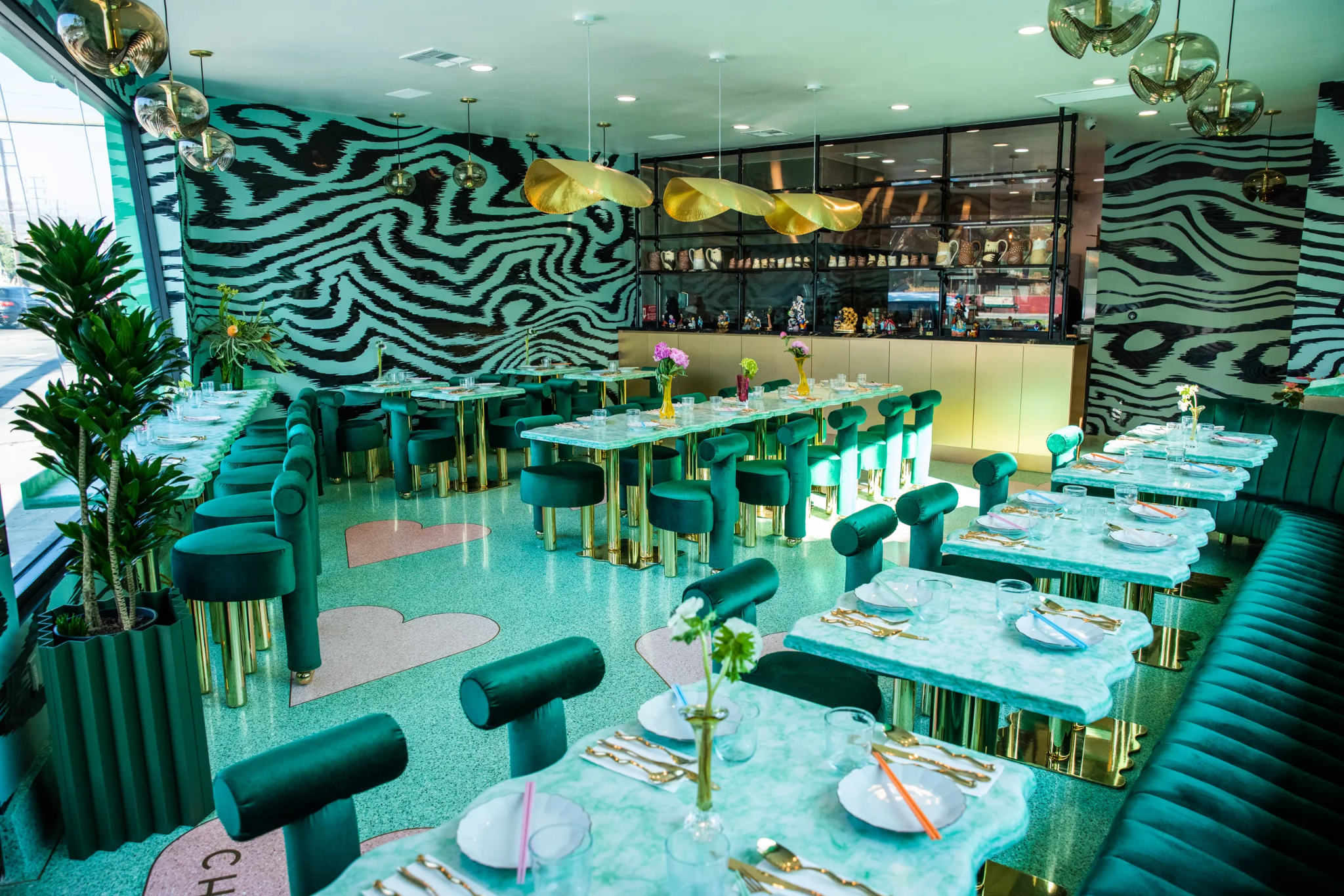
Everything he touches feels rooted in identity, memory, and culture rather than trend cycles. You can see it in Chifa, the Peruvian-Chinese restaurant he opened in Los Angeles inspired by his mother’s original restaurant in Lima, where he reportedly slept on rice bags as a baby while she cooked in the kitchen.
Now he’s bringing that same philosophy to KATSEYE, the six-member global girl group created by HYBE and Geffen Records to function less like a traditional pop act and more like an international project built around distinct identities and backgrounds.
Six girls from six distinctly different backgrounds, each with their own story told through styling, references, and cultural details. Every choice is built from the ground up around who they actually are. Lara Raj, for example, wears a bindi as a way of reclaiming it after being teased for it growing up Indian-American. (Humberto’s imprint on the group runs deep: Lara calls him “mother.”)
“The first thing I said to them was, ‘I want to hear about your background, how you grew up. I know you can dance, you can sing, but let’s hear about what you truly love and are inspired by,’ and with that, we were able to create a story that was genuine,” he told CNN. “We talk a lot about silhouettes, we talk about designers, but it goes beyond that. We make sure that their culture is around and that each girl, as a whole, is represented.”
A Grammy nomination and a sold-out world tour later, Humberto says he wants "people to see themselves" in the group. “I’ve always celebrated this idea of bringing culture together,” he says. “And so, in many ways, KATSEYE is just a different version of that.”
Ian Woods | Visual Artist
Ian Woods is one of the most recognizable collage artists right now, known for creating hand-cut artworks so precise they look digitally rendered.
Every one of his pieces starts more or less the same way: two printed images, one on top of the other. Then, he picks up his X-Acto knife.
What comes next is hard to describe until you’ve seen it. A portrait is suddenly interrupted by precise cutouts that reveal a completely different image underneath. Faces fracture open. Shadows give way to entirely separate worlds. Two realities occupy the same space at once.
Growing up in Keller, Texas, Ian taught himself digital portraiture on an iPad while working night shifts as a dishwasher. He found his way to digital collage in 2018 and landed on his signature style by 2020.
His work feels like a DJ dropping one track on top of another, except instead of faders and loops, he's using a blade and a steady hand. “I like refurbished things, second-hand clothes, stuff with feeling,” he tells WePresent. “It’s the same with imagery. I go after the emotion.”
The hip-hop world noticed quickly.
His work with Frank Ocean's jewelry house Homer circulated everywhere. His cover for A$AP Rocky's Yamborghini High made it official. From there: Jordan, Spotify, Nike, and The New York Times. The LA Times commissioned a piece for the Lakers' 75th anniversary.
Yet Woods is reserved. He is "a real quiet person," by his own description, someone who observes more than he performs. "But my artwork is super loud and makes a lot of noise."