For years, media company execs have had one thing on their mind: Reach as many people as possible and get them to click.
Tech platforms promised to take care of the rest. Feed the algorithm enough content, and it would find the right audience. We all know how that turned out: an onslaught of content, but not necessarily more worth caring about.
Now, some of the most interesting people in media are building more intimate, personal worlds people genuinely want to belong to. Others are reinventing formats, creating better ways to discover, or changing the incentives that determine what gets made in the first place.
These are six people Worklife has IDed as at the forefront of rethinking media from every angle, from the formats and communities people spend time in to the systems determining what gets seen and paid for.
What connects them is a willingness to question how modern media is supposed to work. Does a celebrity interview need to feel like a press junket? Could a backyard be a better stage for discovering music? What happens when a platform pays for originality instead of empty engagement?
They don’t fit the old definition of a media executive. But each is shaping what people watch, listen to, discover and talk about. And as AI makes it possible to produce an endless supply of mid content and the algorithms keep throwing it our way, their most valuable skill is knowing what’s actually worth our attention.
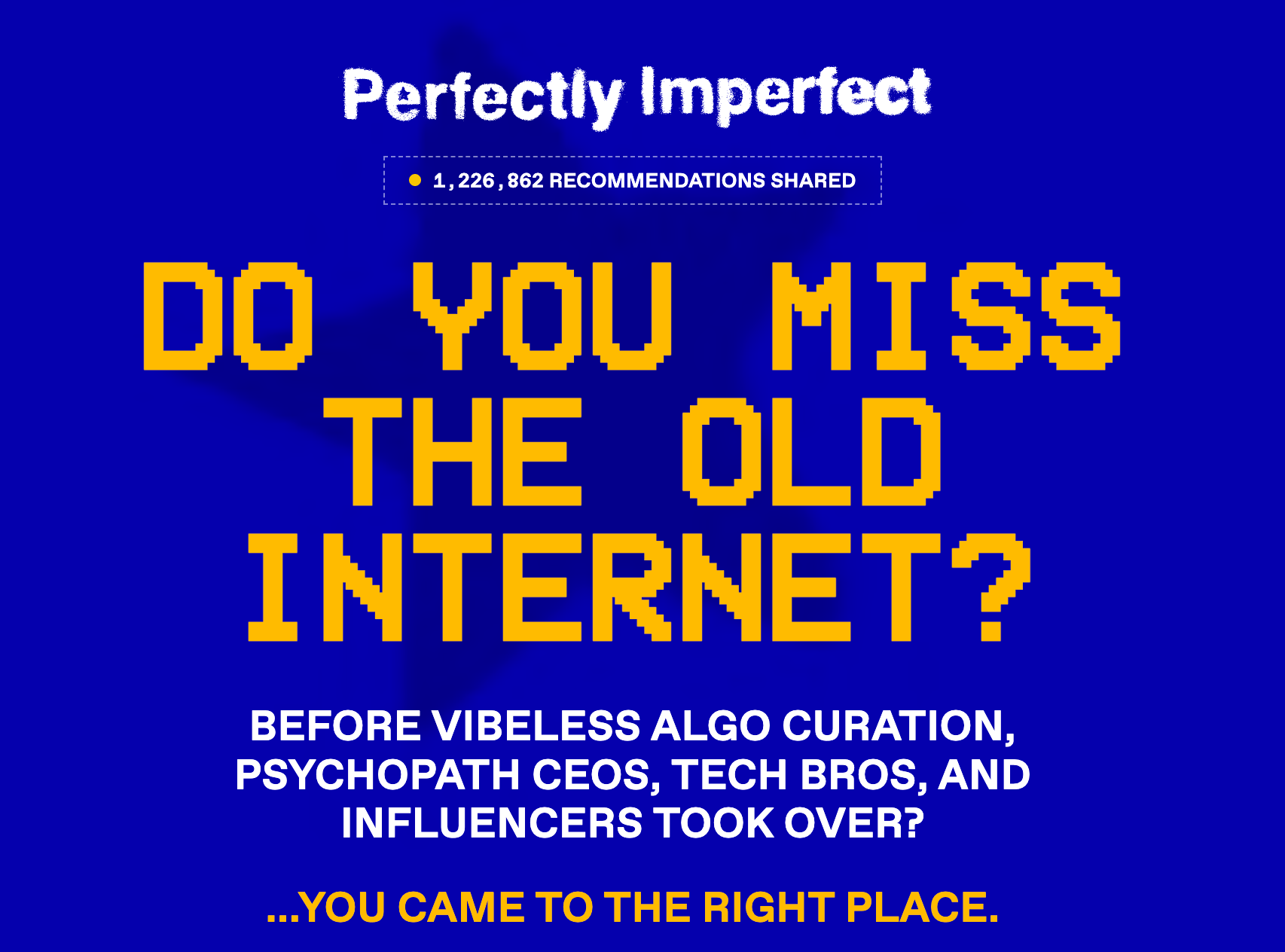
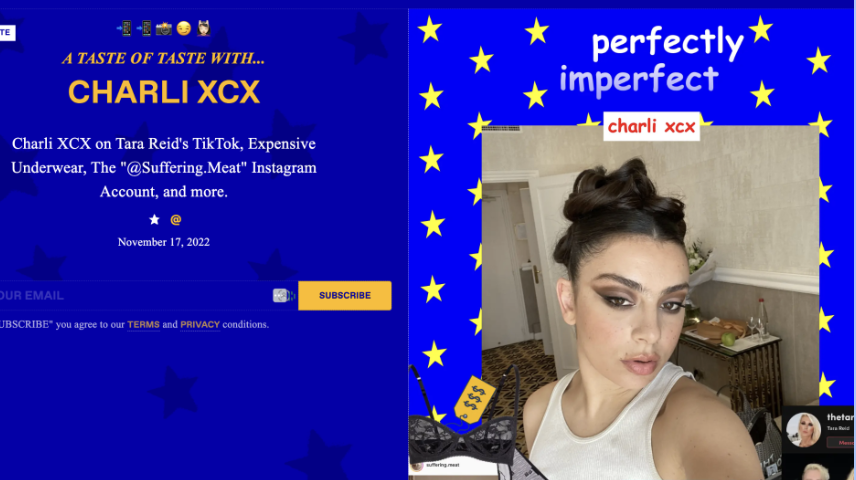
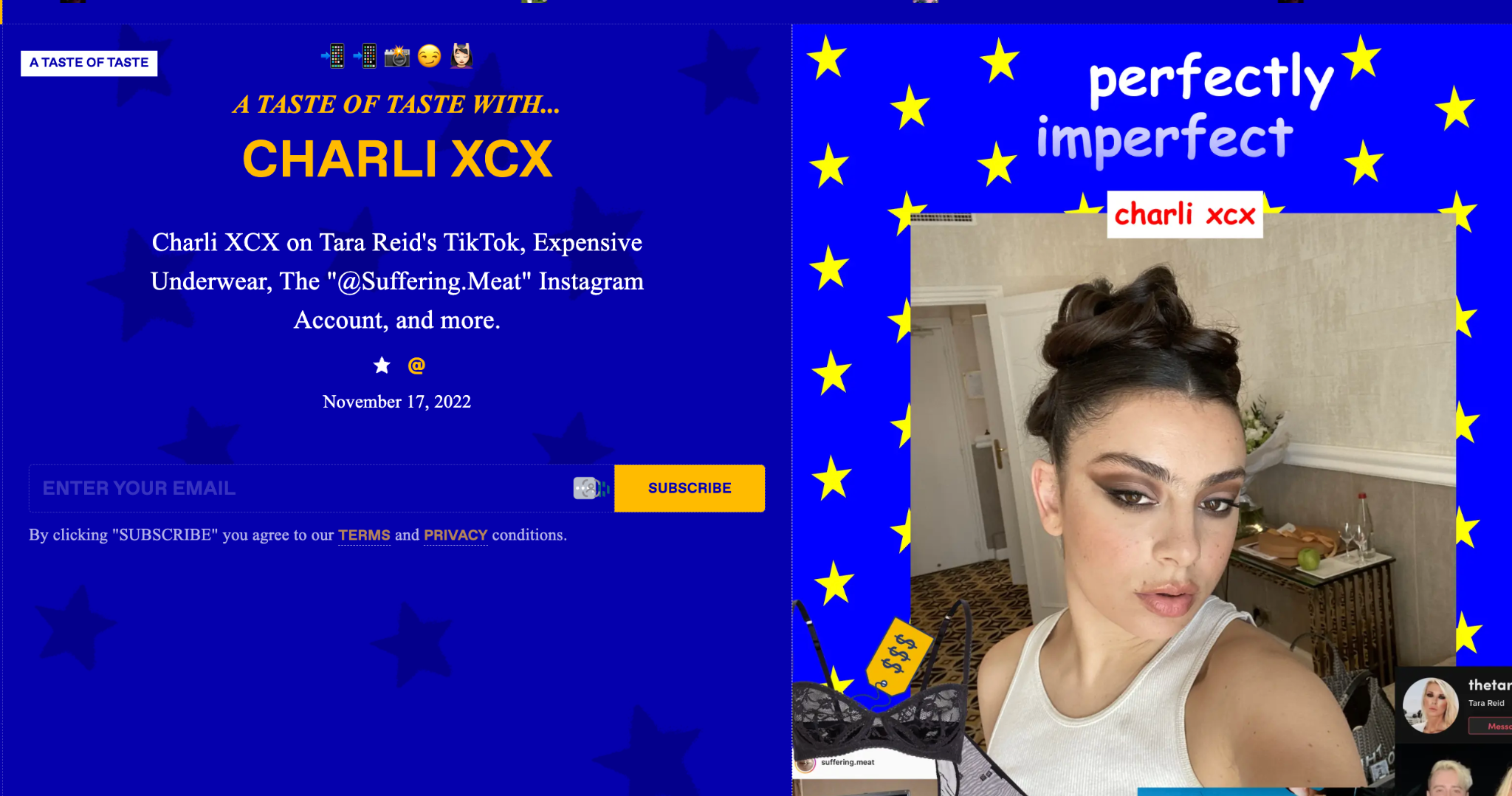
Perfectly Imperfect is what might happen if an early-2000s message board, a great indie magazine and your most interesting friend’s Notes app were combined. It publishes recommendation lists from people like Charli XCX, Olivia Rodrigo, Ayo Edebiri, and Emma Chamberlain. But the appeal is how wonderfully random those recommendations can be. An obscure album might sit beside a favorite sandwich, a place to walk, or a weird personal ritual.
PI has become one of the rare places capable of reaching both famously hard-to-book celebrities and creatives who are still months away from appearing on everyone else’s radar. Founder Tyler Bainbridge has a particular talent for spotting the latter. For example, he booked The Dare to perform at its second-anniversary party in 2022, well before his broader breakout.
Bainbridge calls Perfectly Imperfect the world’s first “social magazine.” Hundreds of thousands of people use its website and app, PI.FYI, to trade their own recommendations, follow users with compatible taste, and post about everything from Ethel Cain songs to grape lattes with cheddar cold foam. The whole thing is refreshingly unoptimized—much closer to the internet before every platform began serving some version of the same algorithmically approved feed.
“[The algorithms] give you the illusion of digging deep when you’re actually being corralled into the exact content they know you’ll like,” Bainbridge told The Fader. PI is built to throw you the curveball instead—to help you genuinely discover something new and unexpected.
It also brings back something many of us miss about the early internet: bouncing around, finding random gems, and feeling a little chaotic in a good way.
Bri Morales, Are You Okay?
Celebrity interviews are usually designed to keep famous people on message. Are You Okay?, the short-form series hosted by Bri Morales on Instagram and TikTok, is not. In fact, it’s meant to make them forget the message entirely. She throws questions at them that are oddly specific, and slightly invasive.
Example: when Morales asked Joe Jonas for an embarrassing memory that still keeps him up at night, he admitted to joining the mile-high club on a private plane—then accidentally high-fiving a flight attendant on his way out of the bathroom because he thought it was his drummer. The story ricocheted from the original clip into People, Billboard, Entertainment Weekly and beyond.
She even got Oprah. Morales managed to flip one of the world’s most famous interviewers into the delighted fan: Oprah described being so blown away by Beyoncé’s Renaissance tour that she sent her a fan letter. Beyoncé responded by sending Oprah one of the tour’s iconic hats.
That’s the trick of Are You Okay?: the questions are playful, but they’re also meant to produce an actual story. Morales doesn’t need ten minutes of throat-clearing to reach the good part. She starts there. The result is the kind of clip that immediately becomes a headline, a group-chat link and a new piece of celebrity lore.
That looseness depends on not over-preparing. “For interviews to feel authentic, I can’t go in knowing every fact about the guest’s childhood,” she told Fan Mail. The research happens, but it doesn’t show. The result feels less like a press stop and more like watching a famous person briefly forget they’re doing press.
- Raihan Anwar, Friends With Benefits
Once a year, roughly 1,000 artists, musicians, founders and self-described “forecasters” head into the mountains of Idyllwild, California. Cell service fades. Kim Gordon and Toro y Moi perform. People move between workshops, film screenings, late-night sets and sound sculptures hidden around the wooded campus. It feels part music festival, part creative retreat and part summer camp for people who spend a lot of time online.
This is FWB Fest, the physical manifestation of Friends With Benefits—an internet community that began as a token-gated Discord for artists, musicians and other crypto-curious creatives. Co-founder Raihan Anwar helped turn it into both an online network with a genuine culture and an annual gathering people treat like a pilgrimage.
At this year’s festival, attendees could sand-cast a lo-fi sound recorder, get a tarot reading about cofounder drama, join Emily Segal for a workshop on “tasteslop” or shake paws with Mayor Max III, Idyllwild’s golden retriever mayor. Five sound sculptures hidden around campus collected their voices and musical experiments for a communal beat tape.
FWB Fest doesn’t feel like a conference with a concert attached. It feels like a temporary world populated by people who were already trading ideas online. The community helps shape the experience, then leaves with new collaborators, friendships and inside jokes.
Chasing a larger audience would dilute the thing that makes FWB valuable. “If you’re optimizing for attention, you start doing stupid shit,” he told Desire Paths. Keeping the community relatively small allows FWB to be highly selective about who and what it puts in front of people—and gives members a real stake in what happens there.
- Braedon Alexander, Medium Sized Backyard
A musician steps through the sliding doors of an ordinary Los Angeles house and into a backyard packed with a few dozen people. There’s no towering stage, LED wall or barricade. Instead, just a band beneath the trees, an audience close enough to catch every sweat drop and cameras capturing the whole thing.
This is Medium Sized Backyard, the live-performance series Braedon Alexander launched in July 2024. Alexander founded the series and oversees its episodes and content, while an early partnership with Pigeons & Planes gave it access to the influential music-discovery platform’s artists, editorial credibility and 1 million followers on Instagram.
The concept: artists play intimate sets in an actual backyard. Full performances live on YouTube, while individual songs and standout moments are cut for Instagram and TikTok. It has the accessibility of a house show with the reach of a major media platform.
That simplicity allows the series to move easily between household names and artists on the verge. Natasha Bedingfield, the Goo Goo Dolls, the All-American Rejects and BENEE have all played the same backyard as emerging acts like Punching Bag, Sam Austins and hey, nothing.
And those introductions travel. Sam Austins’ performance reached more than a million people across Instagram, TikTok and YouTube. Other clips have generated millions of views and introduced previously little-known songs to huge new audiences. Medium Sized Backyard now has more than 45,000 followers on its dedicated Instagram account, in addition to the audience it reaches through Pigeons & Planes.
But Alexander isn’t only building a video franchise. Medium Sized Backyard has begun hosting artist dinners that bring past performers—including bülow, UMI, Niko Rubio and Judith—back together away from the cameras. The dinner table extends the premise of the backyard: put interesting musicians close enough to one another and see what happens.
That’s what makes the project more than another social-first performance series. The videos create reach, but the physical space creates relationships between artists and fans, artists and collaborators, and the musicians who have passed through the backyard itself.
Jeffrey Manu thinks some of the most useful ideas in media are buried inside content most people will never finish.
Manu is a Ghanaian-born entrepreneur who has worked across technology, design, marketing and media for more than a decade. Early in his career, he created one of Africa’s first iPhone apps and founded a design firm and a media company for entrepreneurs.
His latest project, Eversaid, comes from a problem he kept running into himself: he would spend hours listening to podcasts, talks and interviews, hear something valuable and then watch it disappear into the internet.
Eversaid uses AI to monitor long-form media and make all of it searchable. Instead of finding an entire two-hour interview and scrubbing through it, users can search for a person or topic and jump directly to the point where something useful was said. The platform spans business, politics and public policy rather than sorting people into a single ideological lane.
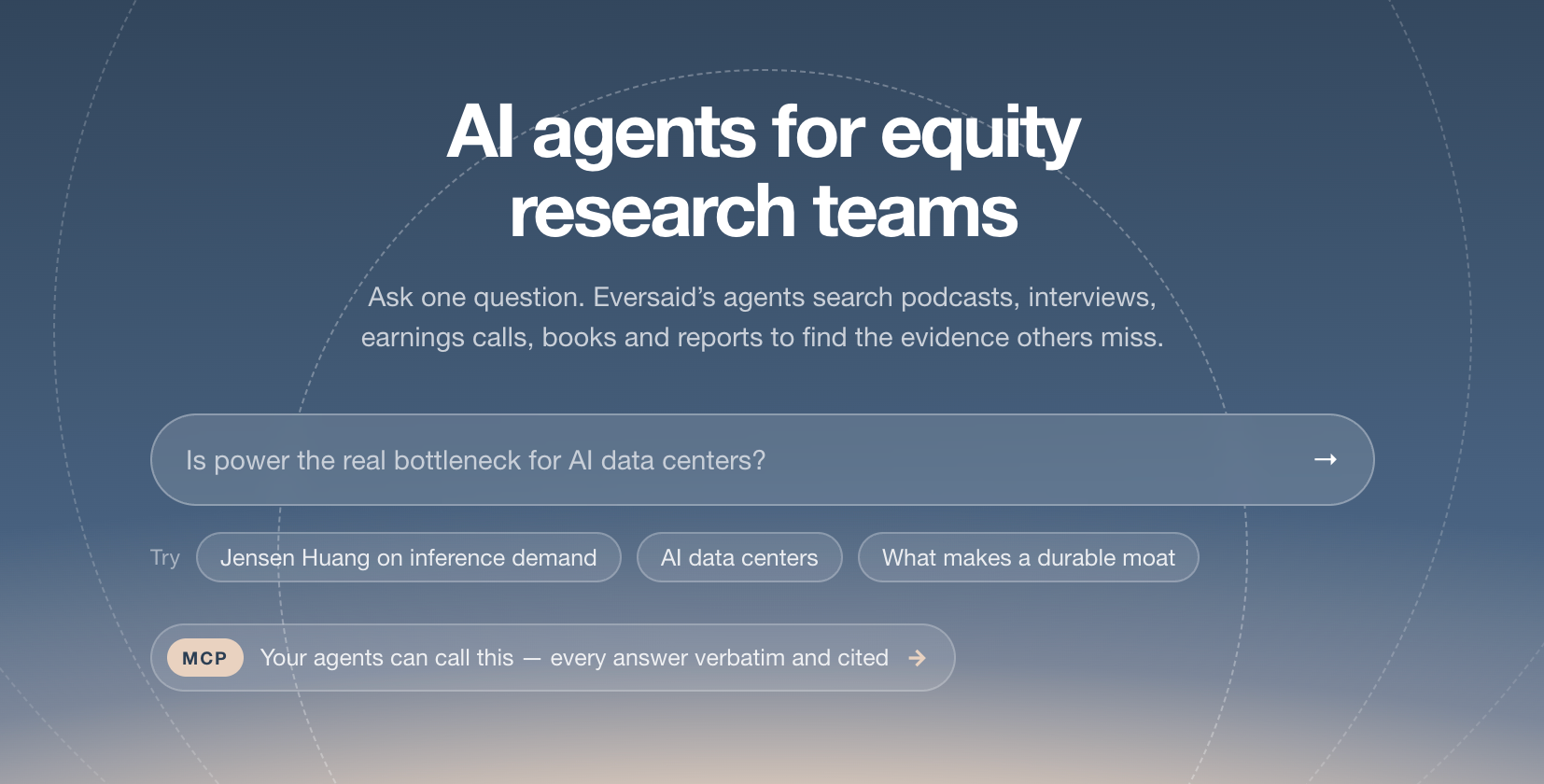
With the influx of content and shortage of time, this solves a real problem in how useful and credible information gets surfaced. Search engines are good at finding headlines. Social feeds are good at finding clips that provoke a reaction. Neither is especially good at helping someone find a serious answer buried 73 minutes into an interview, podcast or congressional hearing.
In a media environment that rewards the loudest quote and the fastest take, Eversaid is betting that people still want to hear what someone actually said, in context.
Allegra Jacchia has spent her career working on the systems behind the creator economy. She worked in creator partnerships, live programming and product at TikTok before moving to X, where she now leads creator product. Her job is to figure out what creators need from the platform—and how X should reward the people producing the reporting, commentary and cultural conversation that keep it relevant.
Her latest project is Original Content Rewards. In September, it will replace X’s existing revenue-sharing program and pay creators for original reporting, analysis, commentary, photography and video—not reposts or lightly repackaged content.
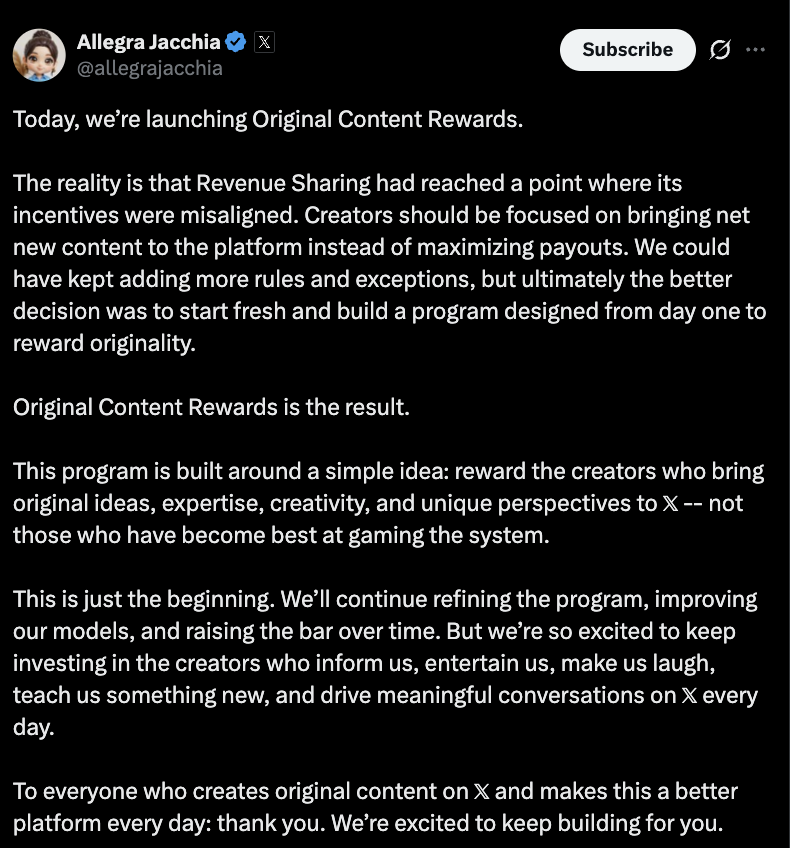
Jacchia is blunt about why the change was necessary. The old program’s incentives had become “misaligned.” Creators were focused on “maximizing payouts” instead of bringing new content to the platform. X could have kept adding rules and exceptions. Instead, X decided to start over.
This is a media story because platforms now do much of what publishers once did: they decide what gets distributed, what gets attention and what gets paid for. Those choices shape what people make. If recycled posts and engagement bait make money, people will keep producing them. If original reporting, expertise and ideas make money, creators have a reason to invest in better work.
Jacchia isn’t running a newsroom or launching a new publication. She is changing the incentives underneath both of them. Whether X can reliably judge originality at scale is still an open question. But her work could help determine whether independent creators can build real media businesses on the platform—and what kind of work fills its feed.