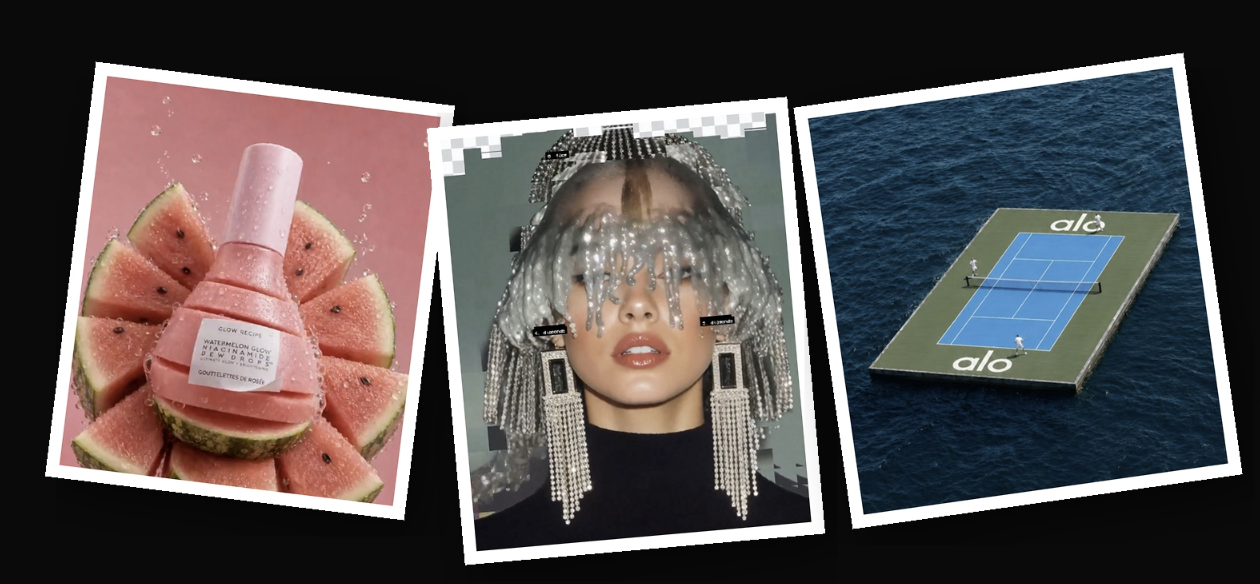
The dominant AI narrative is still about replacement: the jobs that will disappear, the industries that will crumble, the skills that will become obsolete.
But there's a more overlooked, opposite story unfolding: AI is creating entirely new ways for people to learn, build, create opportunities for themselves, and earn a living.
It's the era of the self-made, self-taught builder.
In the remarkably short time AI has been around, we've watched people teach themselves entirely new skills, build products they wished existed with no budget or connections, land dream jobs by sharing something they made over a weekend, and turn years of niche expertise into businesses reaching people around the world.
People who learn in public. Build before they feel ready. Share their work. Find collaborators online. Teach what they know. And increasingly, create opportunities for themselves instead of waiting for someone else to hand them one.
Here’s how we are seeing that new playbook take shape.
1. New styles of creation are emerging
Every major technological shift creates entirely new forms of creative expression. AI is no different, and it’s happening at a rapid speed.
Today, we're seeing new creative disciplines emerge almost in real time: AI-native filmmakers, speculative brand designers, creators building fictional products and worlds, and artists treating prompts, story, motion, and editing as one creative medium rather than separate crafts. These aren't traditional creative jobs with AI layered on top—they're entirely new styles of creation.
Take creative director and founder Salma Aboukar, who builds AI-powered advertising for brands and says AI is "changing how I approach ad concepts altogether,” leading her to conceive of ideas differently from the start.
We've seen the same pattern across the AI-native art world. Artists like Gizem Akdag aren't simply creating standalone images; they're building immersive visual worlds that extend across campaigns, recurring characters, and original creative IP.
Meanwhile, Nigerian filmmaker and creative technologist Malik Afegbua has pioneered an entirely new form of AI storytelling, using generative tools to create projects like The Elder Series—a fictional high-fashion runway starring older adults that challenged cultural stereotypes and grew into exhibitions, brand partnerships, and commercial work.
Neither creator is using AI to do an existing job faster. They're using it to create new formats, mediums, and full-fledged careers.
2. Shoot your shot for your dream company, client, or project
The front door to your dream job is more crowded thane ver. As writer Maja Voje recently pointed out, you have to find the side doors.
LinkedIn reports that the average U.S. job now receives more than twice as many applicants as it did in spring 2022. AI has made it easier than ever to apply and much harder to stand out.
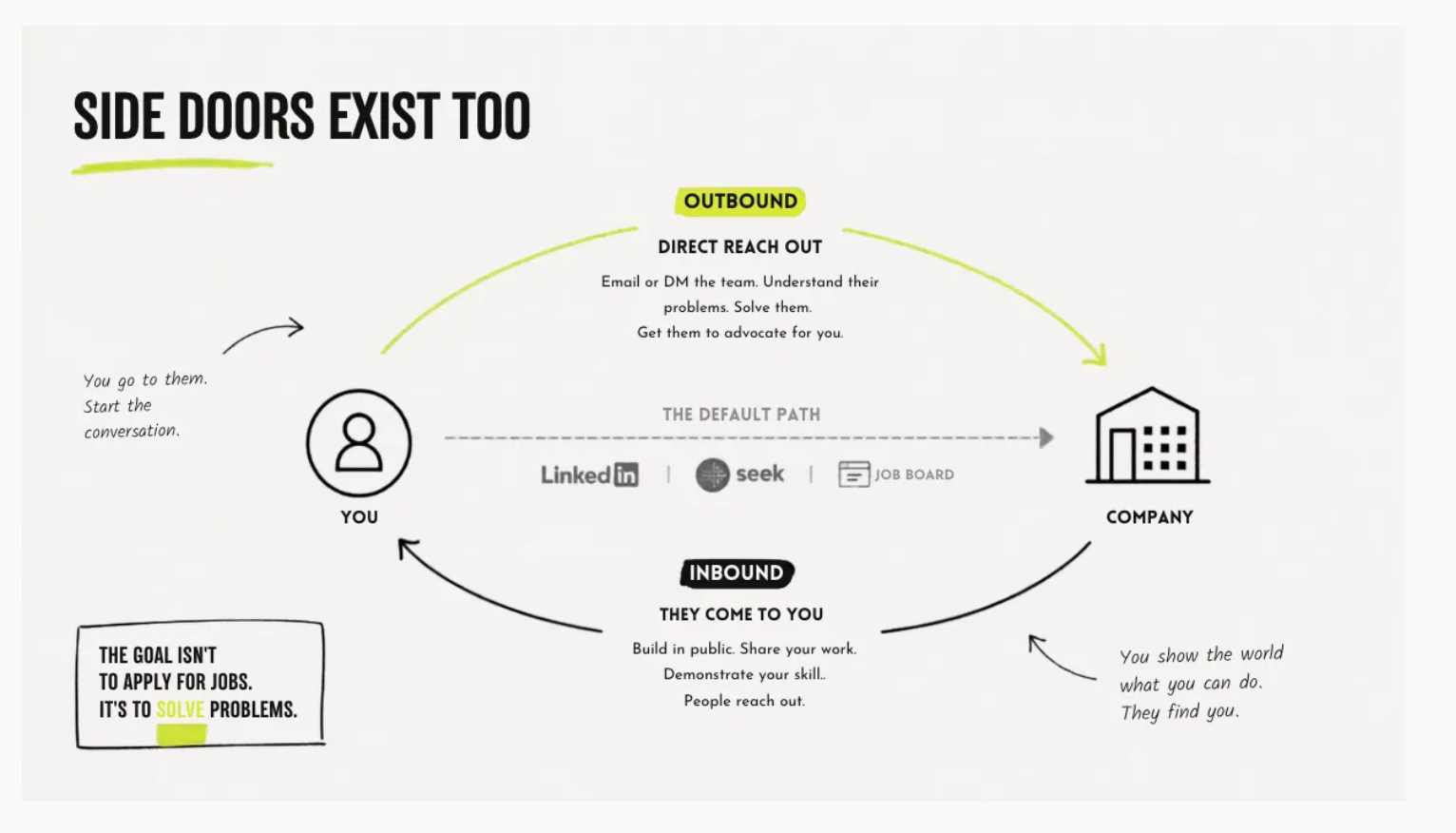
The people breaking through are increasingly creating different kinds of signals. They're publishing ideas, building side projects, documenting what they're learning, sharing experiments, and putting work into the world before anyone asks for it.
Maja points to examples like Jae, whose essay on taste caught the attention of the CEO of Australian healthcare company Eucalyptus and ultimately led to a job. She also highlights Ethan, who published a guide to image models while experimenting in his college bedroom -- a founder looking for a technical partner found it and made Ethan the technical co-founder of Leonardo AI, one of the fastest-growing generative AI startups before its acquisition by Canva.
Neither opportunity came through a traditional application. They happened because someone made their thinking visible.
3. Learning is now immersive and anyone can teach their craft to the masses
The internet is becoming less performative and more participatory. The creators building the strongest businesses now aren't just producing content—they're documenting how they think. They share prompts, unpack decisions, explain their process, and invite people to build alongside them.
The work is no longer just the product. It's the curriculum.
That shift is creating a new kind of creative career. Instead of building large agencies or managing sprawling design teams, more experts are choosing to stay close to the work—operating as solo practitioners, fractional creative leaders, boutique studios, and educators whose knowledge compounds through products, communities, and content.
For example, creator Noor Mtir has built an audience not simply by showcasing finished work, but by breaking down her creative process in public—sharing prompts, experiments, and lessons along the way. The work becomes the lesson, and the audience becomes part of the journey.
And creative director Ivan VVSVS believes the creatives who will thrive in the AI era won't just produce great work, they'll build frameworks, methodologies, and tools that help other people create. He argues that the biggest shift isn't mastering the latest AI tool, but turning your expertise into something that compounds long after you've stopped working.
We're also seeing creators rethink what success online actually looks like. As New York Magazine recently reported, many longtime influencers have found that endlessly producing content for an audience can be surprisingly isolating. Increasingly, they're finding more fulfillment—and often stronger businesses—in coaching, teaching, and helping other people build.
The future of creative work may belong less to the biggest organizations and more to the people whose expertise compounds.
4. Winning AI companies will still center humans
Many of the fastest-growing, most defensible AI companies aren't trying to remove people from the equation. They're building around them.
Companies like Handshake, Mercor, and Contra all use AI to connect people, surface talent, and scale human judgment. The technology matters, but so do the networks behind it.
We're seeing the same dynamic emerge in creative work. As companies invest in storytelling and race to teach AI their brand voice, aesthetics, and taste, they're discovering that those things don't come from a model alone. They come from creatives.
One startup recently faced significant criticism after positioning itself as having cracked the taste problem, with many creatives arguing that taste isn't something you can simply engineer—it's built through years of lived experience, context, and creative judgment.
That's why companies with deep relationships across designers, writers, filmmakers, strategists, and other creative communities may ultimately outperform labs with a handful of engineers claiming they've solved the "taste problem." AI can help scale good judgment, but it still has to learn it from somewhere.