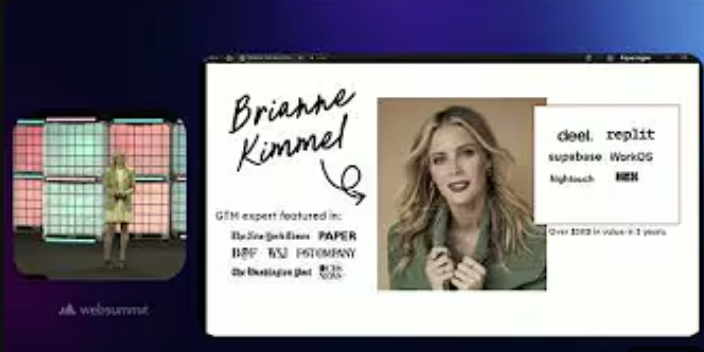
A conversation between host Sonya Bush and Brianne Kimmel, founder of Worklife Ventures and GTM advisor at ElevenLabs, on the Meme Team Podcast — where they break down viral pop culture moments across movies, TV, music, and politics. This week: what a wave of AI-content announcements means for creators and audiences, why human craft still wins, and how a new generation is building audiences that the gatekeepers can't ignore.
Three AI announcements, three different bets
Sonya: Last week brought three big AI-content announcements. Barnes & Noble's CEO James Daunt said he's willing to stock AI-generated books, but expects publishers to label which ones are AI — pushing the responsibility back onto them, and most have decided they don't want AI books. Amazon's Alexa announced custom AI-generated podcasts, created in real time per listener on any topic. And Spotify and UMG announced that premium subscribers can create AI covers and remixes of artists like Taylor Swift, Ariana Grande, and Billie Eilish as a paid add-on — artists opt in, credit is required, and they share in the revenue. So who does this actually serve?
Brianne: From Barnes & Noble's perspective, they compete with Amazon — and for years Amazon has enabled a new type of writer, creator, and self-publisher. Think about poets like Rupi Kaur: internet-famous, Instagram-native, and rejected by traditional publishers for most of their careers. Amazon built a platform where an idea or piece of IP can become a PDF or an audiobook, and the traditional players will have to catch up.
Should there be protections for existing IP? Absolutely — you shouldn't be able to copycat a Stephen King novel and just swap the names. People should own and control their IP. But publishers have to accept that an AI-native future is coming. A lot of my friends are bestselling writers and screenwriters, and what excites them isn't AI writing the story — it's AI dynamically translating it into 70+ languages so they're internationalized from day one, or using character voices to make an audiobook more immersive than a single author narrating. Used well, it improves the quality of the work.
Sonya: The bigger thing for me is that the market will win. If people don't want AI books, they won't sell. Same with music — wouldn't you rather create your own IP than remix someone else's? It's the Wild West and people want to experiment, but I think the line reverts back to human-made art being the best. Look at the Enhanced Games: athletes competing fully juiced up still lost to the human record holders. AI is the enhancement, and unenhanced artists keep winning. That discernment is only going to grow.
The companies handling this well are saying: let's experiment, make it obvious when something is AI, and let the customer decide.
Why human craft still wins
Brianne: When the electric guitar came out, some people called it cheating — and it created entire new genres like heavy metal. It never took away from a brilliant acoustic player. AI-native filmmaking is the same: it won't replace classically made films, it'll create a bifurcation. Practical effects are a perfect example. Jacob Elordi as Frankenstein — someone sitting in a chair for 12 hours getting prosthetics done is true to the art form, and that's what wins awards.
Sonya: Project Hail Mary was hugely popular because of its practical effects. They built the world and the sets, so you could feel what human creativity imagined space to be. Something gets lost when you let AI stitch together an amalgamation of everyone else's idea of space, instead of one artist's singular vision.
Brianne: A hundred percent — I've been focused on this for the last six months. I hired a head of creator community who grew up in Hollywood and knows what's getting greenlit and adapted. We're obsessed with AI-native filmmaking and out evangelizing it at AI on the Lot and South by Southwest, because the next Walt Disney could genuinely be a 14-year-old in their bedroom producing films at a fraction of the cost.
But a lot of AI "slop" looks cheap because the person making it has never been on a film set. They've never seen the obsessive attention to detail. On a period piece like Westworld or Mad Men, the wallpaper is from the era and the shoes are meticulously designed — if wardrobe can't find something authentic, they'll spend weeks building it. Anne Hathaway spent an entire interview talking about her hair and makeup artist. That artistry isn't going away. So if you want to disrupt the industry, go spend time on a set — every film basically runs like a startup.
Use AI as a tool, not a replacement
Sonya: The lesson in all of this is to go back to basics. Learn the foundations of whatever you care about — read fiction, philosophy, theory, science — so you can actually discern AI from human work. Once you know the fundamentals, you'll see where AI genuinely helps: the repetitive grind you've already mastered. My real fear, especially for kids, is that they use AI to replace the work instead of as a tool, and lose the ability to be creative and resourceful. Learn to write or make music first, then figure out where AI can enhance it.
Brianne: There's a related problem: validation. There's a whole subgenre of couples online talking to each other the way they talk to ChatGPT — and it reflects how accustomed we're getting to constant praise when what we actually need is critique. I share first-draft ideas with Claude that are genuinely not good yet, and I've had to learn to prompt it differently: "I don't want validation. I want to get better as a writer. What styles should I be mirroring? How do I improve this?" It's our job to be self-critical — and to put ideas out in public to get the honest feedback these tools won't give us.
Distribution is the real battleground
Sonya: Every platform is seeing the same writing on the wall — people want to experiment — so they're all opening up while acting as gatekeepers. Spotify chose consent and compensation. Barnes & Noble chose labeling and letting the market decide. Amazon basically said, "let people decide." For marketers, the question is whether you wait for consensus or experiment now. If you're cutting-edge and your audience accepts AI, experiment. If they won't validate it, maybe you pause.
Brianne: It depends on the path you're aspiring to. If it matters to you to land a traditional publisher with airport distribution, great — but that's two to three years and many rounds of review. A self-published author can ship two or three books in that same window. If you see your journey as iterative and you want to build a body of work, AI will help you accelerate and publish more.
The best marketing teams think like film studios
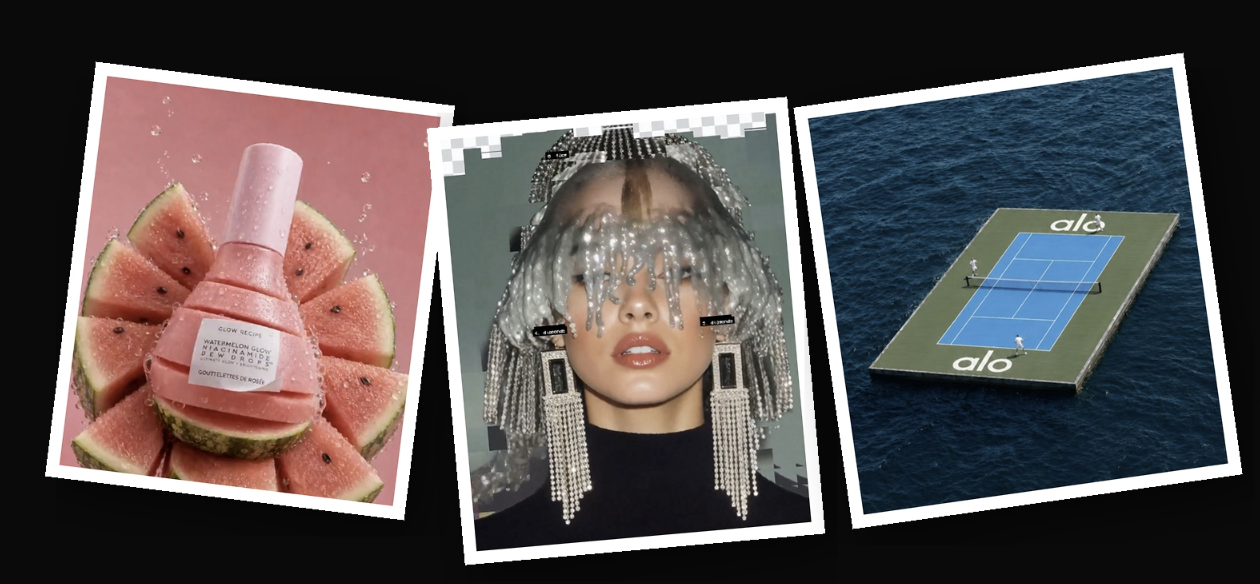
Brianne: Storytelling is where companies differentiate, and right now a lot of them have cash but no strong vision for their brand. They'll spend big on one polished launch video to get their name out, then have no strategy to keep building afterward. And there's a ton of pay-to-play — paying a celebrity to be the face, putting a logo on a Formula 1 car or a tennis court. But without the foundational brand work, people just see a logo and have no idea what you stand for.
Sonya: F1 teams and English soccer clubs went from crypto sponsors to AI sponsors, and you have to wonder how many people actually know those brands versus a Rolex or Disney. Does seeing Perplexity on Lewis Hamilton's helmet really send people to Google "what is Perplexity"?
Brianne: At the Laver Cup in San Francisco, the two hero sponsors were Rolex and Perplexity, and I thought — that's a very expensive brand activation. Rolex fits that audience obviously; Perplexity less so, though it might be a smart awareness play for the right people. But it can't be the whole strategy. A logo courtside is one pillar; it only works alongside real education through other channels.
The best marketing teams today think like film studios. I'm seeing HR companies and security companies — not obviously creative businesses — invest in short-form and fictional narrative content. We've hit the point in the tech cycle where every company has a podcast, usually an interview show with the founder or a guest on a book tour. Those work, but they're table stakes, not differentiators. When a company tells me "we're doing a user conference," I say: yes, and what else?
What's actually interesting is companies building consistent, original IP. Tech needs more whimsy. Replit's whole vision is that anyone can be a founder — a single mom with a high school degree, a farmer in rural Africa — because everyone has life experience and a skill; the missing piece was access. They could run a documentary interviewing unexpected founders. Runway is taking it further with film festivals, financing films, and teaching young people to make them. Everyone says "we're disrupting Hollywood," so it's hard to tell who actually understands building for creatives — the ones who educate and empower the next generation stand out.
The case for going analog
Sonya: We're also seeing the return of IRL — pop-ups and in-person experiences where people meet others like them. Online is the first step; the next is showing up, becoming part of a community, and generating word of mouth. Polymarket and Kalshi opened grocery stores in New York.
Brianne: When I started Worklife Studios in Silver Lake during COVID, we took over Depop's old space next to APC and Warby Parker. My investors thought I was crazy — "why do you have a physical location? Pop-ups are a waste of time." But we hosted creator nights teaching the tools we'd invested in, and partnered with brands like Chrome Hearts, where every A-list celebrity and athlete showed up. To build for creatives, you have to be physically present.
UGC is ephemeral, but bringing people together creates memories they talk about for years. I'm excited about a new analog future — events where nobody had their phone out, where it was Polaroids and real conversation. That's paid dividends for our funds, because we spent years designing spaces where creatives learn from each other.
Stop chasing trends — make something original
Brianne: There's a lot of controversy around clipping and remixing right now, and my view is we still need people generating net-new ideas. You have to go into the wilderness and actually write the song, the chapter, the book. A channel that purely aggregates and clips will get virality, but no one remembers who you are or what you stand for. Take a few days off, come up with ideas other people haven't, and decide what you want to be known for. Remixing can support that — but you need a core.
Sonya: As I've grown my own TikTok, I've noticed almost every marketing tip is "copy this viral trend." It works like an MLM: the first creators to a trend get the views, then it filters down, then everyone moves on. Where are the original ideas? Marketing is boring if all you do is chase trends — why would anyone follow you? Companies should at least ask whether a trend fits their audience and whether their audience will even get the joke.
Brianne: Founders always copy the same one or two well-designed companies. From a VC's perspective — and I can be self-deprecating here — never ask your investors for design advice; we're notorious for copying each other's websites and podcasts. You're far better off wandering Erewhon and looking at cool labels, or going to a record store or a bookstore. Get exposed to different genres and ways of thinking. Be weird and quirky and experiment outside the usual tech and business design playbooks.
The YouTube-to-horror pipeline
Sonya: This is where it gets interesting for this new generation of creators — especially in horror. Two films just came out from creators who came up on YouTube and TikTok. Curry Barker, 26, made a low-budget film called Milk and Cereal and released it online; that audience helped him land his feature Obsession with Focus Features and Blumhouse. He made it for around $750,000 — practical effects, makeup, duct tape, and his dad — premiered at TIFF, went wide in May 2026, and has grossed $75 million. Kane Pixels took a similar path with Backrooms, a found-footage YouTube series based on internet horror lore, shot alone with no budget and over 100 million views; A24 picked it up.
Horror seems to be the one genre where you can come up from the bottom and immediately get a deal by proving you already know what you're doing. Two reasons: these creators built real storytelling muscle on the small screen, and horror itself is suited for it — audiences expect it, it's driven by human performance and practical effects, and it doesn't need expensive CGI. Shooting in a month for $750k is normal by horror standards but unheard of elsewhere. Other genres should be learning from this.
Brianne: Horror's done this for decades — think The Blair Witch Project. Every decade has its own flavor of low-budget, low-fidelity, wildly engaging horror that becomes a cult classic and a time capsule. Paranormal Activity shot in a single house to control costs — that's how Blumhouse became Blumhouse. And horror has always been a launchpad for A-list careers: the Scream and I Know What You Did Last Summer class, Jamie Lee Curtis. In the TikTok era it's even more powerful — films are casting straight from TikTok, putting a recognizable influencer on screen for two minutes before they get killed off. Paris Hilton in House of Wax is a perfect example: barely in it, totally memorable.
These films are cheap, people get obsessed, and you get franchises — Scream III through VI, a new Halloween every five years. Horror is wildly underestimated, and other genres should learn from it. The awards-bait films are often too long and too serious. I loved Project Hail Mary precisely because it was limited-cast and Ryan Gosling carried the whole thing. There's a real place for ensembles of young first-timers who enjoy working together and then go on to bigger things.
Sonya: Award shows need to catch up to what's happening in horror. If Hollywood wants to keep growing, it has to take seriously that the innovation — and the money — is coming from there. F1 got an honorary Oscar nod last year for revitalizing the box office, like Top Gun: Maverick before it. Obsession will likely cross $100 million worldwide; it deserves its flowers too.
Brianne: There's also a subgenre doing real social and political commentary you can only get from horror or dark sci-fi. Parasite and Squid Game say more about class and status than most of the political conversation happening on social media. Black Mirror has done more for how people think about technology than any VC's thoughtful predictions — seeing it on screen hits home in a way an essay never will. These films translate what we're anxious about into something visual and alive.
Sonya: That's exactly why everyone should be paying attention to art and reading fiction. I just read Katabasis by R.F. Kuang — basically a modern Inferno wrestling with immortality, life, death, and sacrifice. I hate the "I don't read fiction" line you hear so often in tech; you're missing out on empathy, philosophy, and a sense of your place in the world. Part of why Project Hail Mary resonated is that it's one of the few stories about tech optimism — fixing the world through science instead of just dystopia.
Brianne: We need a deeper appreciation for artists and their backstories. Years ago in Tokyo I wandered into a gallery of early Tim Burton sketches and read the plaques about his childhood. His entire ethos came from rejecting boring, keeping-up-with-the-Joneses Southern California suburbia — the pre-approved path of becoming a lawyer or a McKinsey consultant. Instead he made Edward Scissorhands and The Nightmare Before Christmas. Whether someone starts in horror or self-publishes to silence, the creatives who last stay true to their own ethos. The risk right now is that everything starts to look the same — one story arc does well and we all copy it. I keep encouraging creatives to step back and ask what they actually want to be known for.
Three lessons from the new creator playbook
Sonya: I'd boil it down to three lessons.
First: the establishment may control distribution, but it doesn't control the talent. Curry Barker didn't ask Hollywood for permission — he just made the films. There's a political parallel: part of why Zohran Mamdani won the mayoralty is that he went direct, using YouTube and TikTok to talk to regular New Yorkers.
Second: understand the constraints of your medium and get creative inside them. Horror lets you shoot in a month with practical effects and a skeleton crew — so lean into what audiences already expect. Every creative field has a version of this.
Third: once you have an audience and a proof of concept, it can't be argued with. Once Curry Barker had millions of views and a following, studios greenlit him instantly because he'd already done half the work. Same with Mamdani's organic following. If you can go around the establishment, do it — especially if you're young and don't want to wait for the boomers and Gen X to retire. Put your ideas out there.
Own your work: the creator-founder era
Brianne: The best comedic actors — Robin Williams, Jerry Seinfeld — started in stand-up, because nothing stands between you and a dingy comedy club. You can't wake up and decide to be a Grammy or Oscar winner, but you can make a song in your bedroom and post it to TikTok, or work out material and put it online. There are baby steps to every lofty goal, and the barrier to entry has collapsed. Starting in horror doesn't mean horror forever — a couple of hits, then dramas, then evolving as you gain budget and access.
Sonya: But there's a trap. Marvel and Star Wars love tapping indie directors and then tying their hands. Chloé Zhao's Eternals underperformed partly because the studio wouldn't let her tell the story her way. The Mandalorian and Grogu isn't bombing, but it's not landing like it should. Damon Lindelof — the mind behind Lost, The Leftovers, and Watchmen — was brought onto a Star Wars film and then fired over creative direction. Yet Andor succeeded precisely because it had room to breathe outside the machine. If you hire creatives for their storytelling and their audience, you have to actually give them freedom — the same way companies hire influencers and then try to micromanage every word.
Brianne: That's why more creatives are starting their own companies and production companies to keep creative control. Notice how often the producer is also starring in the film now — they want control over the design, the locations, and the money. It used to be that talent aspired to be the face of Chanel for supplemental income. Today they say, "I have a vision for a product. I have the brand. I am the distribution."
As the big institutions get more guarded and cut budgets, more creatives will stay indie forever — for their values, their creative control, and to own more of the upside. You also see this with women who've been told they're "too old." Meryl Streep famously hit a stretch where she was only offered witch roles. Now women build companies instead: Courtney Cox launched Homecourt and leaned straight into her personality, and Rihanna runs Fenty while refusing to compromise on raising her kids. These celebrity-founded businesses change how the industry takes them seriously — women are becoming billionaires as founders and CEOs.
Films are the future of marketing
Sonya: I just wrote an essay about brands partnering with female-centered stories — the Barbie spectacle, Wicked, The Devil Wears Prada 2. On Netflix, Kate Hudson's Running Point features brands like Sephora and State Farm directly in the show. The next iteration might be female production companies going direct to brands — Kickstarter-style — to fund the work, then bringing it to a studio just for distribution. Brands have the money, and people genuinely hate ads. That's part of why clipping is taking off: you trust a curator not to drop an ad break in the middle.
Brianne: Sean Baker's first film after Anora was a branded film for the fashion label Self Portrait. A Malaysian designer got Sean Baker and Michelle Yeoh to make a beautiful short — Yeoh wears the brand throughout, but it never feels like the long ad it actually is. Shot on an iPhone, she plays five or six roles, and it's gorgeous. More brands should do that. Would you rather have your logo on a soccer jersey sleeve, or a beautiful film that goes viral and earns you long-tail credit for making real art with respected people?
Sonya: Stripe does this well — Stripe Press, plus a documentary channel that dives into things like Japanese whisky making, purely for love of the craft. They funnel money from the tech business into documentaries, books, and the arts because they see the value in both. Funding real storytellers is the smartest path for tech companies, especially as they navigate growing animosity toward AI. Both industries are in California — they should come together.
Brianne: In San Francisco, nine out of ten billboards are about agents replacing employees. But Airbnb tells stories about why people travel, and AllTrails runs ads about trail time over screen time. Those companies remember that agents aren't driving the car on the 101 — humans are. Stories that make people think will always land better than the same convoluted AI pitch. And the companies that pull this off are the ones that deeply understand their users — digging into the data to find the human anecdotes worth telling.
Why building an audience shouldn't be the goal
Brianne: We have an incredible amount of tools at our disposal. The people who think tools-first make more slop; the people who have a vision for the story they want to tell, and know exactly who they're trying to reach, are the ones who break through. I even push back on creators whose whole goal is "build an audience" ... to what end? Sometimes a few things go viral and you end up with the wrong audience entirely, and you have to ask whether to keep it or burn it down and start over.
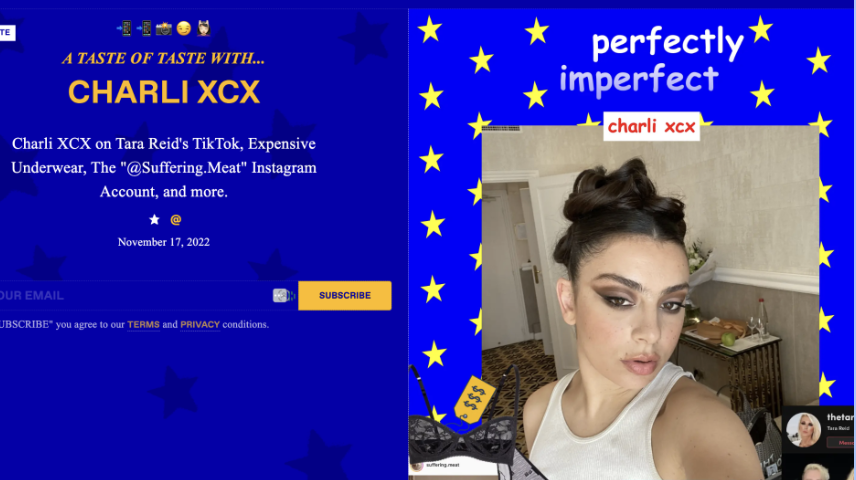
Artists move in chapters. Charli XCX had her peak Brat Summer — the tour, the film — and now she's writing on Substack, focused on acting and living on Letterboxd. It's on us to say "that's who I was, now I'm someone new," even if it means losing the old audience. And AI genuinely helps here: editing is faster, so more people are making video, and you can speak in many languages in your own voice. I'm speaking in Rio in two weeks to a largely Portuguese-only audience, so I'm using my AI voice to translate my old podcasts into Portuguese — something I'd never have thought to do before.
Sonya: Reese Witherspoon talks about walking with purpose toward where you want to go. She optioned books to create the female-centered roles that didn't exist for her, and that became Hello Sunshine. The other piece is monetization — build something that pays you while you're doing it, and diversify so you're not dependent on a single source of cash flow in case you lose the audience.
Brianne: People call me one of the first Twitter-native VCs, but the honest reason is that no one would answer my emails. I moved to Silicon Valley as a nobody, and you can either pray someone eventually wants to get coffee, or you can write your ideas down, put them out there, and get comfortable being wrong and occasionally embarrassed. That's how you get better. If you're a self-starter who's comfortable publishing your work and riding the ups and downs of feedback, this is an incredibly exciting time — anyone can start something.
Sonya: That's the whole reason horror matters as an example: it's already happening there, and it's possible everywhere else once you learn the tools. Being against AI is counterproductive — if you use it to enhance your own uniqueness, that's exactly how you fight back against slop and everyone reverting to the mean. It's not enough to say "I'll never use AI." There are a hundred ways to use it, and nobody even agrees on what that phrase means anymore. I'm excited to see what people build.
Find Brianne Kimmel at @BrianneKimmel on X and Instagram, and weekly on Substack at brianne.substack.com. Follow the show at @memeteampod on YouTube, Spotify, and TikTok.