Somewhere in the middle of this year’s Milan Design Week, a disused phone booth from the 1990s spoke back.
QS Ventures had repurposed it into a moss-covered relic parked inside BASE Milano, housing an AI voice agent named Gaia who talked to you in whatever language you came in with.
The theme for Fuorisalone this year was "Connected Worlds,” as a nod to the tangle of digital and physical, human and machine. AI was everywhere. Installations explored the future of design through robotic 3D printing and AI-assisted creativity. British studio Blond teamed up with Harry's to present two products, one designed by AI and another by traditional processes, to stress-test what the difference actually feels like. Google turned light into formless partitions at its "Making the Invisible Visible" exhibition
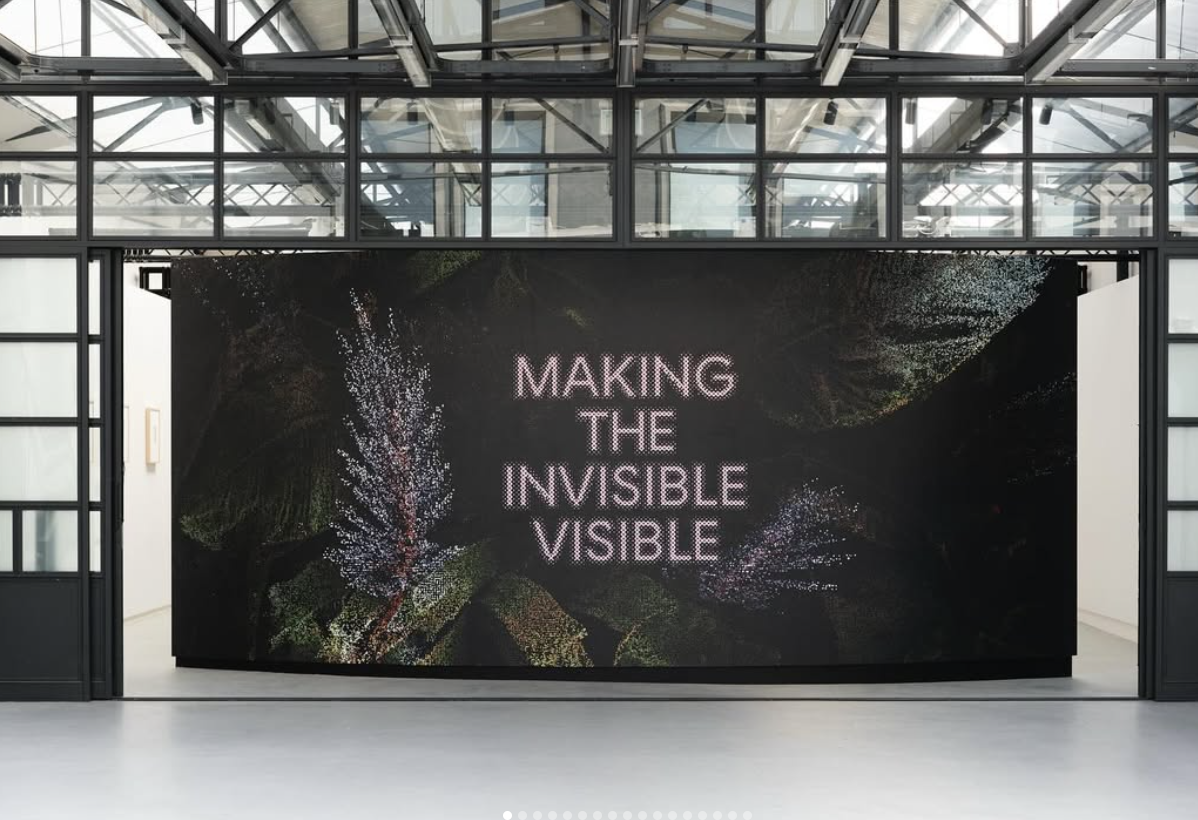
The design world was, publicly and officially, reckoning with the machine.
And out of all the creative fields navigating this moment, the architecture profession may be reckoning with it the fastest. That's partly because of the nature of the work itself, a field built on documentation, coordination, and information production, much of which turns out to be exactly what AI is good at.
Amir Hossein Noori, the London-based founder of AI Hub, puts the number bluntly: as much as 80% of what architects currently do could eventually be automated.
Most people hear that as a threat. But Amir thinks of it as the most exciting thing to happen to his profession—a chance to strip away the parts of architecture that were never really architecture.
Problem Solvers, Not Just Building Makers
When Amir, who grew up in Tehran and eventually moved to London, decided to study architecture, he thought he’d be doing a lot of math. Instead, he studied pineapples.
How they grow. Their biggest challenges. And potential technological ways to improve the process.
The assignment sounds random, but it became foundational.
“It was a shock,” he said. “I thought architecture was engineering plus a bit of art. But it was much more about understanding systems, behavior, and how things connect.”
That idea still shapes how he thinks about architecture today. “An architect is a fancy name for a problem solver,” he said.
The discipline he fell in love with at university was expansive. Systems thinking. Concept work. Creative exploration. Then he started working.
He spent several years working at high-end London firms doing hotels in Kenya, Soho Farmhouse, and private residences for actors and celebrities. Interesting work, by most measures. But most of the time, he wasn't designing. He was producing floor plans, technical drawings, contractor-facing Excel sheets. The actual creative problem-solving that had hooked him in school was buried under a mountain of documentation.
“I realized the end product of an architect is almost always a building, which felt limiting” he said. “and thought, ‘If this is what I'm going to do for the rest of my life, I want to be more creative.’"
Then AI showed up.
Experimenting with AI
He was the first at his firm to take AI seriously. He'd show colleagues what the tools could do and get polite interest but not much urgency. The images were pixelated and abstract. Not exactly ready for a client presentation. But Amir wasn't looking at what the tools were. He was looking at where they were going.
Outside work, he had already started building a niche online community of about 1,000 followers through YouTube videos exploring architecture, technology, and creative workflows. Long before most firms were talking seriously about AI, Amir was publicly experimenting with it online and documenting what he was learning in real time.
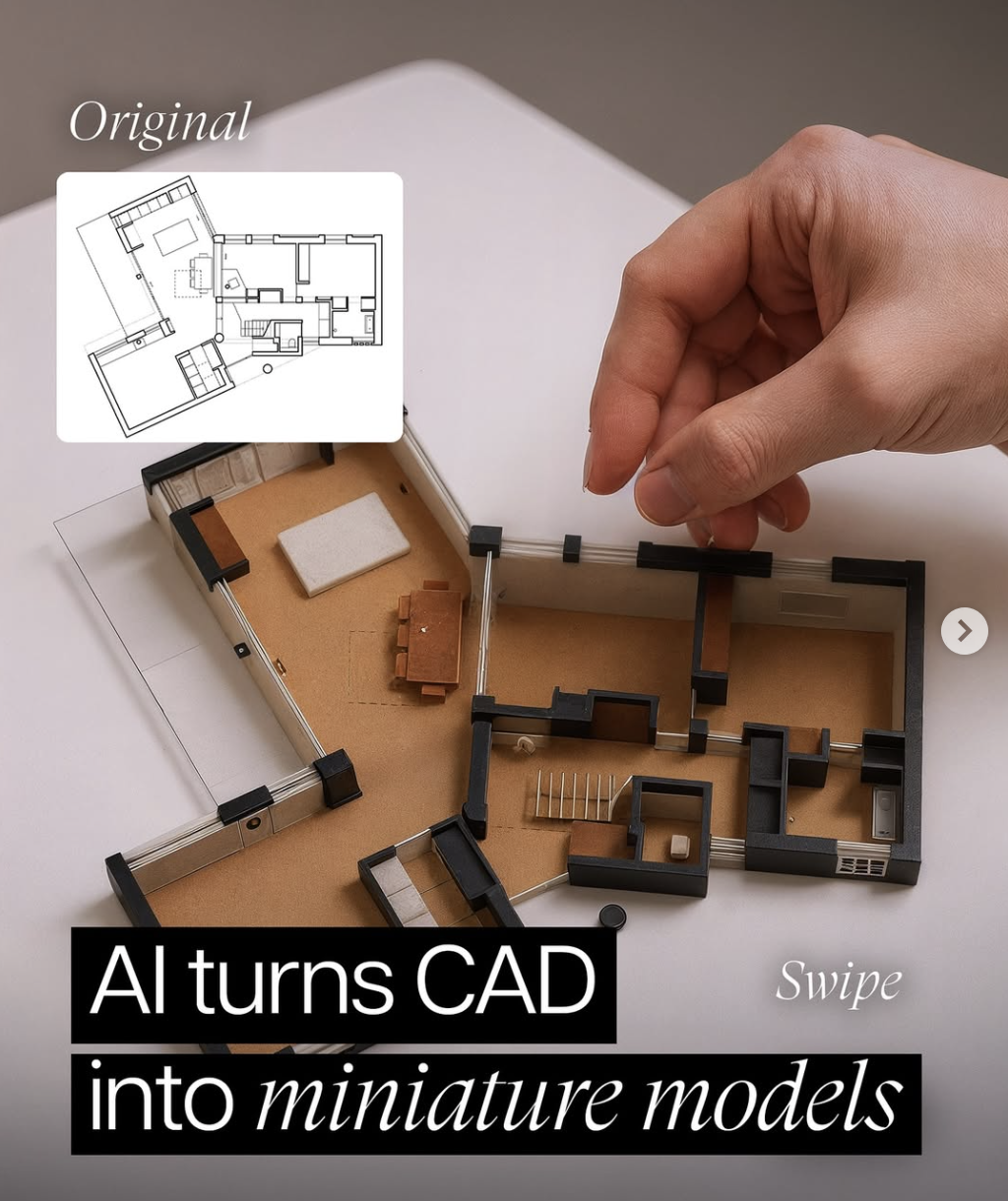
The moment that crystallized it for him: he had an idea for a chandelier with plants growing through it, diffusing light while staying green. He put the concept into MidJourney and got back a set of abstract, painterly variations. Nothing you could hand to a contractor. But the images showed him possibilities he hadn't been able to picture on his own.
"It already became practical for me—it helped me ideate, and that was good enough,” he said.
He started teaching other architects and interior designers how to use AI tools. The courses gained traction. Then Shiseido reached out. They wanted a pop-up store for their hundredth anniversary in the Mall of Emirates, and they wanted it designed with AI. Amir pulled in a colleague and they worked nights and weekends to deliver it. The fee was roughly three months of his regular salary for about two weeks of work.
"If they're paying that much," he thought, "people will pay even more."
He started taking Mondays off from the firm to pursue his own research. Eventually, the inbound was too much to handle in the margins.
He quit, co-founded his company, AI Hub, and filed the company in late 2023.
Helping Architects Through the AI Panic
Today, AI Hub runs two tracks: an academy offering AI training for architecture and interior design firms, and a design collaboration arm that partners with firms on high-stakes pitches and projects.
Their clients and collaborators have included Dolce & Gabbana, where they worked with the design team on AI-assisted workflows for retail concepts, and Google, where they taught interior designers how to use Google’s image model.
One of the projects he’s proudest of was rescuing a pitch that was about to be abandoned. An interior designer had been shortlisted for a prestigious London restaurant opening but lacked the time and resources to concept the project properly. AI Hub took the designer's early direction and produced ten distinct concepts. The designer chose two to develop, presented one to the client, won the project, and was later featured in a major design magazine.
"From a lost project, it became one of their main projects," Amir says.
About 85% of AI Hub's work is now education. But the more interesting bet — and where most of Amir's current attention goes — is a platform they launched five months ago called narva.ai.
The premise: the fragmented workflows that plague architecture (renders in one tool, floor plans in another, cost analysis somewhere else, building code compliance elsewhere) is itself a design problem. Narvai.ai is meant to be an operating system for architects. A single platform that handles the work from concept to delivery, with AI agents pre-trained on the specific tasks that architects actually need done.
"An average architect going through design should not be on social media searching for AI workflows," he says. "That's not their job. Their job is to do design."
Architects Have Adopted AI Faster Than Other Creative Industries
Resistance to AI within the field exists, but it’s becoming less common.
Some of the architects who three years ago were commenting on his posts — *this is never going to get anywhere close to practicality* — are the same ones now posting about spatial dimensions and asking why a rendered building window details are slightly off.
The anxiety he encounters most often is about design itself: the part of the job that architects feel is irreducibly theirs. The worry is that using AI for ideation means outsourcing authorship.
Amir's response to that is patient, almost therapeutic.
"If you understand that there needs to be a correct direction—a very personal direction from you as the designer—so that this AI can execute on this project properly, then you understand: this is not AI that is designing the project. It is you."
He pauses, then adds: "I call myself an AI therapist for architects. I'm there to tell them, hey. It's okay. You're not gonna go away."
The analogy holds. Architecture is having something like a collective reckoning with its identity. And Amir's job is increasingly about helping people sit and work with that uncertainty rather than fight it.
Staying human
When asked how he copes with how fast his field and technology are changing, Amir talks about it in terms that sound almost counterintuitive coming from someone building an AI company.
He is trying to stay human.
That means being as intentional about his personal life as he is about building a business. He treats gallery visits and cultural experiences with the same seriousness as work meetings. He blocks time for sport, maintains a close social circle, and has even built a personal tool that integrates his professional and personal commitments into a single view, so he can ensure neither comes at the expense of the other.
"The things I learned from different cultures, the books I'm reading, the human experiences and the interactions I had with my social group — these are going to be the most important," he says. "AI can have none of that."
He points to a piece of calligraphy on his wall — a reflection of his Persian background — and talks about how his cultural inheritance is something he brings into his work that no model can replicate. "What remains is all of your experiences and all of your interactions with people. This is what makes you human."
It's easy to read this as sentiment. But Amir frames it as strategy. If AI is going to continue getting better at hard skills and digital execution, then the human side of creative work isn't just a nice-to-have. It's the only defensible ground.
"If you don't go to the human gym now in the age of AI," he says, "I think we're going to lose it to AI big time."
His advice for creatives who feel like they're already behind: don't wait to dig in.
"Everyone is behind," he says. "We're all in the same ship."
What he tells people is to follow the thread. Look at what you love, figure out what the future version of that looks like, watch the interesting people working at that intersection, and start experimenting.
"As Steve Jobs always said, you can connect the dots backwards, not forward. It all makes sense at some point. Just try not to get overwhelmed and take it one step at a time."